Interviewing Rohini Didi
By Ashrith Reddy and Riddhim Inamké (Grade 11)
We sat down with Rohini Didi at the dining hall and saw, up close, the quiet devotion our didis and dadas put into our lives every single day and night. Their care, presence, and stories are the heartbeat of our community. To celebrate them and the bonds they help nurture, the newsletter will share interviews with these remarkable staff members—reminding us that every teacher, student, and staff member is part of this shared journey. Here’s the interview.
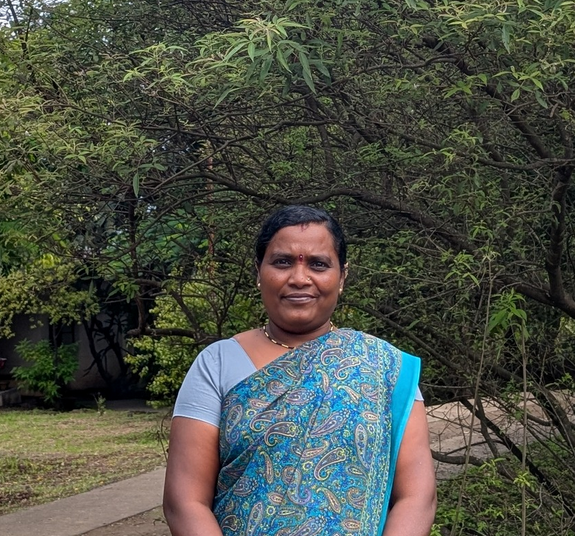
“When did you join Sahyadri? What made you do so?”
Didi: “I joined Sahyadri in 2009. Before that, I often saw women from my village returning home in uniforms. Curious, I asked them where they worked and came to know they were at Sahyadri, encouraging me to join too. Since then, I have been working in the dining hall and have really enjoyed it!”
“How was your first day here? Was it difficult to adjust?”
Didi: “Sure, my first day was overwhelming, but a month in, I was feeling right at home.”
“Having been here for so long, have you noticed any changes in how things were back then compared to now? How much would you say this place has changed?”
Didi: “Earlier, most students spoke Marathi, and we formed personal connections with many of them. Now, with greater diversity and fewer Marathi speakers, interactions are less frequent. Still, I don’t let language affect my relationships—I care for the whole community, teachers, students, and staff alike. That said, there’s definitely more room for us—Didis and students—to connect. Even now, this interview gives us a rare chance to just have a conversation.”
“Definitely! It hadn’t really crossed our minds before, but looking back, it’s clear that students could make more of an effort to build meaningful connections—especially knowing that we are not going to be here forever. It’s a good reminder to make the most of the experience while it lasts. Speaking of which, could you share a bit about your daily routine?”
Didi: “I wake up at 4:00 a.m. every day to get ready and finish all the household chores before heading to the school with the other didis. As soon as we arrive, we get straight to work—preparing breakfast. After that, there’s still a lot to do—cleaning up and getting things ready for lunch. Hygiene standards have gone up lately, so we have to keep the kitchen spotless throughout the day. Sometimes it feels like there’s not even a moment to breathe. But we do it all with love, because we know you all are living far away from your families, and you deserve food that feels like home.”
“We have to admit, there’s truly no boarding school like Sahyadri when it comes to food—it’s all thanks to your hard work! We had no idea just how hectic your routine is. It’s easy for us to forget the effort that goes into everything, especially when we’ve been quick to complain about the food at times. You’ve really helped us see things from a new perspective, and for that, we’re grateful. Now, if you’re open to it, could you share an anecdote that has stayed with you?”
Didi: “One evening, as the children returned the milk cans, they saw us working late into the night and were genuinely amazed. That night, craving chillis and chapati, we didis had prepared a big ‘thecha’ and each had brought a chapati to share. To our delight, the children joined us, expressing heartfelt thanks and noticing the dedication we put in, even so late. Seeing them truly appreciate our efforts was a moment I’ll never forget—it made all our hard work feel completely worthwhile.”
“That was such a heartwarming story! How has the school impacted you, and what are you most grateful for?”
Didi: “I hardly know where to begin. The school has supported us in countless ways, and I have grown so much here. During the COVID pandemic, when many lost their jobs, the school stood by us financially and ensured we remained employed. Living with the children brings me immense joy—their happiness is mine. This job means everything, especially as the sole breadwinner. My husband has had a fractured hand for over three years and cannot work, and we cannot afford his surgery. I manage the household on my earnings, though it has been hard—I even had to temporarily withdraw one of my children from school. I worry about the future when I can no longer work. My heartfelt hope is that the school might offer a retirement pension or annual salary increases. It would ease our burdens and give us security. I trust the school will hear this with compassion.”
“Thank you for sharing your story with such honesty. Your dedication and resilience are deeply appreciated. We hear your concerns and are grateful for all that you do for the school and its children.”